
5 TAKEAWAYS FROM THE CREATION STORIES
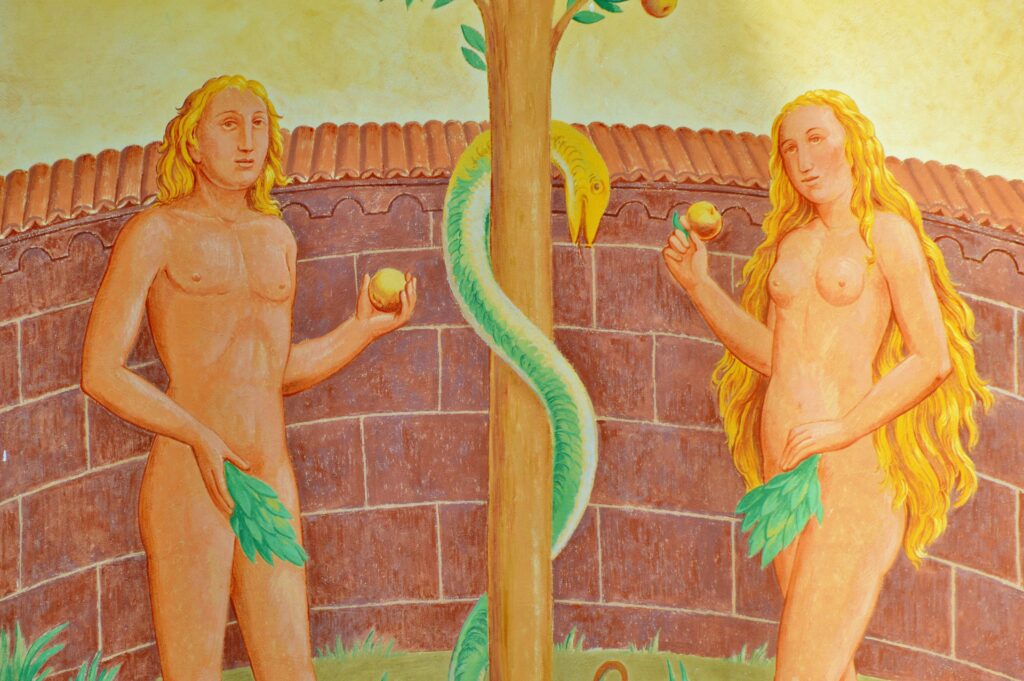
Stories? The first strange thing you might notice is the word “stories” instead of “story.” There are in fact two different versions of the creation story that are back to back in Genesis, with the cut off from one leading into the other being in the middle of Genesis 2:4. Some people take these two different versions of creation to be a contradiction and others think it works out just fine. We are going to work under the assumption that these two very different stories don’t pose a contradiction. The first story seems to focus more on terrestrial order whereas the second story focuses on the relationship between the human and divine. When taken together, we get a full and lively picture of creation. A very quick recap of the creation stories can be found below, which you can reference throughout.
The First Story (Genesis 1:1-2:4): In the first Genesis story we hear that the heavens and earth were created in seven days. On day 1 we see God create light. On day 2 God creates the heavenly vault. On day 3 God creates the dry land and the seas, grasses, plants yielding seeds of their kind, and trees bearing fruits. On day 4 God creates the sun, moon, and stars. On day 5 God creates the swimming creatures and the flying creatures. On day 6 God creates cattle, crawling things and wild beasts. Last but not least on day six, God creates the humans. “And God created the human in His image, in the image of God He created him; male and female He created them.” (Genesis 1:27). The humans are then told to be fruitful and multiply, and as an interesting side note, humans and animals here all seem to be vegetarians.
The Second Story (Genesis 2:4-24): In this account, heaven and earth had been created but no plants had appeared since God had not yet made it rain. Before God does this, God creates man from the soil and blows the breath of life into his nostrils for the man to become a living being. God planted a garden in Eden and placed the human there where all kinds of trees were made to grow. Some of these trees are pretty, some are great for food, and in the middle of the garden stand both the tree of life and the tree of the knowledge of good and evil. The man is placed in the garden to take care of it and is explicitly told not to eat from the tree of the knowledge of good and evil, “for as soon as you eat from it, you shall die” (Gen 2:17). God then decides it’s not good for man to be alone so God creates and brings beasts and birds alike to Adam for him to name and for him to see if any suitable helper/sustainer for himself could to be found. Nothing suitable was found so the Lord cast a deep sleep upon Adam, took out one of his ribs, and created from his rib the first woman. Adam is extremely pleased with this woman stating,
This one at last is bone of my bones and flesh from my flesh. This one shall be called Woman, for from the man this one was taken. Hence a man leaves his father and mother and clings to his wife, so that they become one flesh.”
(Gen 2:23-24)
Now, on to the five takeaways:
1) These Stories Were Not Understood Literally By The Original Audience. An easy example of why specifically the first creation story was not taken literally is the fact that light is created before the sun and stars and the days are counted before the sun was created, which is what we use to measure our days. This point is why modern day Jews and many Christians have no problem with the earth being billions of years old and even why they have no problem with evolution. The amount of time that can pass in a day without the sun is unlimited, thus there is no need to worry about science probing into the true age of the universe and there is no need to worry about the specific evolutionary details of what happened before the creation of modern man. Time here seems intentionally vague.
Another example of why these weren’t understood literally is that they have conflicting details. Was man created first or last? Well in the first creation narrative the answer would be last, and in the second, man was created before the other animals. This is so easy to see that it’s obvious that if God really did dictate the Bible to Moses, he wouldn’t have messed up like that in the very beginning of the story. As Nahum Sarna points out, biblical man had not discovered the scientific method or analytical experimentation. Biblical man instead thought in imaginative ways and expressed himself pictorially, emotionally, and poetically. The way we think a story should be told in order to make sense simply isn’t the way the people in biblical times thought, and since we are reading a work of their time, we need to adjust to their ways of thinking.
Lastly, though this is very controversial, many scholars use the argument that if these stories of Adam and Eve, Cain and Abel, Noah, etc., were supposed to be taken literally, their characters would have been so important that they would be referenced elsewhere in the Hebrew Bible. They are not. There are a few tiny exceptions in the Hebrew Bible where genealogy lists are referenced without stories, and three places where Noah is briefly mentioned, but otherwise, these characters are never mentioned again until later on in the Hellenistic and Roman periods in the books of Enoch, Jubilees, 2 Baruch, 4 Ezra, and Sirach. The New Testament makes use of many of these characters, but it’s worth noting that as a whole, the Old Testament does not. The message of these characters were received but their historicity was never taken at face value. The point isn’t to probe into whether they existed or not, the point is for us as readers to see how we are like them, in what ways they represent us individually, and in what ways they represent humanity as a whole. We are supposed to learn from them and conduct ourselves in accordance with the underlying messages we receive.
2) The First Three Words of Genesis Are Very Powerful. The first creation story is actually extremely well structured and complex poetry. We will save the details of that for another article, but the theological messages within this poetry are beautiful.
The Bible starts off by saying something along the lines of “In the beginning…” depending on your translation. That seems simple enough but not every religion’s scriptures put their creation stories at the beginning of the actual story, making the Bible very different in this regard. The theological point in putting creation at the beginning is so we can see that Israel’s God isn’t only for Israel. The God of Israel created everything and everyone and Israel’s God is actually the God of all of humanity, whether humanity knows it or not. Many other religions also have backstories to their gods which explain how the gods themselves were created, but here in the beginning God is simply there. God is omnipresent with no beginning and no end. God is unlike anything else that ever was or ever will be.
3) Genesis Silently Snubs Polytheism. We can start to see these casual snubs in the first sentence of Genesis, but the anti-polytheism gets more detailed as we go.
In the Enuma Elish, one of the most famous stories of the ancient world, which was well known to the Israelites, the role of human beings on earth is quite grim. The god Marduk created man from the blood of a rebellious god as a way of freeing the gods from the unending toil they complain about. Marduk is praised as the king for eternity and humans are essentially equivalent to slaves. Contrast this with God’s creation of humanity.
And God created the human in His image, in the image of God He created him; male and female He created them.God blessed them and God said to them, “Be fertile and increase, fill the earth and master it; and rule the fish of the sea, the birds of the sky, and all the living things that creep on the earth.’”
Genesis 1:27-28
Humanity is not made from the blood of a rebellious god, humanity is made in the image of the one and only supreme, creator God. Humanity is also not made to be a slave to the gods, humanity is meant to rule (responsibly) over the earth and tend to God’s creation. Humanity cannot be enslaved to beings that do not exist.
One more quick example we will go over is when God creates the lights.
‘God said, “Let there be lights in the expanse of the sky to separate day from night; they shall serve as signs for the set times – the days and the years; and they shall serve as lights in the expanse of the sky to shine upon the earth.’ And it was so. God made the two great lights, the greater light to dominate the day and the lesser light to dominate the night, and the stars.”
Genesis 1:14-16
So much is going on here. First of all, God creates the “lights” to divide day from night and to demarcate the seasons. In the pagan religions, the changes in nature during the seasons were signs of actual events going on in the lives of the gods themselves, and great rituals were performed to the gods during these times. By simply saying that these lights are nothing more than daily and seasonal signposts, the entire structure of the polytheistic system has suddenly become irrelevant. Also notice that God never uses the words “sun or moon”. The reason behind this is that these words in Hebrew were similar to the names of polytheistic gods. Shemesh, the word for sun, sounds like Shamash, the Babylonian deity, and likewise Yareach, moon, sounds like Yarikh, the Ugaritic moon god. In the spirit of making silent theological points about polytheism, these words were completely omitted to ensure there that no questions could exist about whether polytheistic gods were being referenced within the biblical works. There was to be no confusion permitted. The Bible’s silence speaks volumes.
4) We Are Intimately Connected to the Earth
The English translation of the Bible misses a great Hebrew pun about the creation of humanity. When we read that, “…the LORD God formed man from the dust from the earth.” (Gen 2:7) we miss the Hebrew connection between man and soil. In Hebrew, “the man” is ha-adam and “arable soil” is adamah. So God makes adam from the adamah, or the human from the soil. Another neat translation, in my opinion, is the earthling from the earth. “Man” here isn’t referring to just males, but refers more to mankind, or to humanity as a whole. The moral here is great. We are not separate from the earth, we are literally made from the earth and will return to it when we die. Adam is also told to till the soil in Eden, which adds another element. Our bodies are sustained by the food we eat, so not only are we from the soil, our bodies continue to gain its mass from the soil’s produce, and we will return to the soil in the end. We were given dominion over the earth but when we understand that we are not separate from it, we realize that our jobs are to tend to the earth as if it is our own body, because quite frankly, it is. If we act selfishly and with greed, we will be tempted to exploit the earth and the other creatures on it for personal gain, but we can see right away that this directly harms us. No good can come of being irresponsible and greedy with our duties. The only right course of action is to tend with diligence and care to the earth, our bodies, and the other creatures around us, for we are all intimately connected.
5) Adam and Eve are Equals:
We get the first glimpse of this equality in the first creation story in Gen 1:27 when we read, “And God created man in His image, in the image of God He created him; male and female He created them.” In the first creation story, woman is not created from the rib of the man, but woman and man are both created together in the image of God. One is not superior, they both form two parts of one whole. A beautiful way I’ve heard this said is that you can’t see God in a room full of men and you can’t see God in a room full of women. You need both men and women for such a task.
Surprisingly, the story of the woman coming from the rib of the man in the second creation story is also symbolic of equality. Many people use this story against women because they assume that since the man came first in this creation story, women are secondary and not as important. This rationale leads many people to justify women being stuck in subservient roles to men, even to this day. The rationale for this story representing equality goes something like this: God did not take Eve from Adam’s head to lord it over him, He did not take Eve from Adam’s foot to be walked upon by him, but God took Eve from Adam’s side to walk with him, from beneath his arm to be guarded by him, and from near his heart to be loved by him.
Lastly, Eve is often called Adam’s helpmate. Many people take this to mean that women are subordinate to men, and they are simply nothing more than little secretaries for their men. That’s not what the Hebrew word means at all. The word helper is used 21 times in the Old Testament and 19 of those times this word is used in reference to God being the helper. When Eve is created, she is not substandard and she is sure not around to make Adam his sandwiches. Her role for humanity is vital. God creates Eve as a helpmate for Adam when he announces that it’s not good for man to be alone. Adam needed companionship. This also shows that one of the reasons for our lives, one of our primary functions on this earth, is to love. We were meant to spread love to our families, sure, but since Adam and Eve represent all of humanity, we were also meant to spread our love far and wide. Harboring hate and hostility shows that we are not grasping this specific message, and many others throughout the Bible.
Sources:
The Great Courses Lecture Series – Understanding the Old Testament: Professor Robert D. Miller II: Lecture 1
Understanding Genesis: Nahum M. Sarna: Chapter 1
The Meaning of the Bible: Douglas Knight and Amy-Jill Levine
The Great Courses Lecture Series – The Old Testament: Amy-Jill Levine
Bible Translation: JPS Tanakh
Leave a Reply