
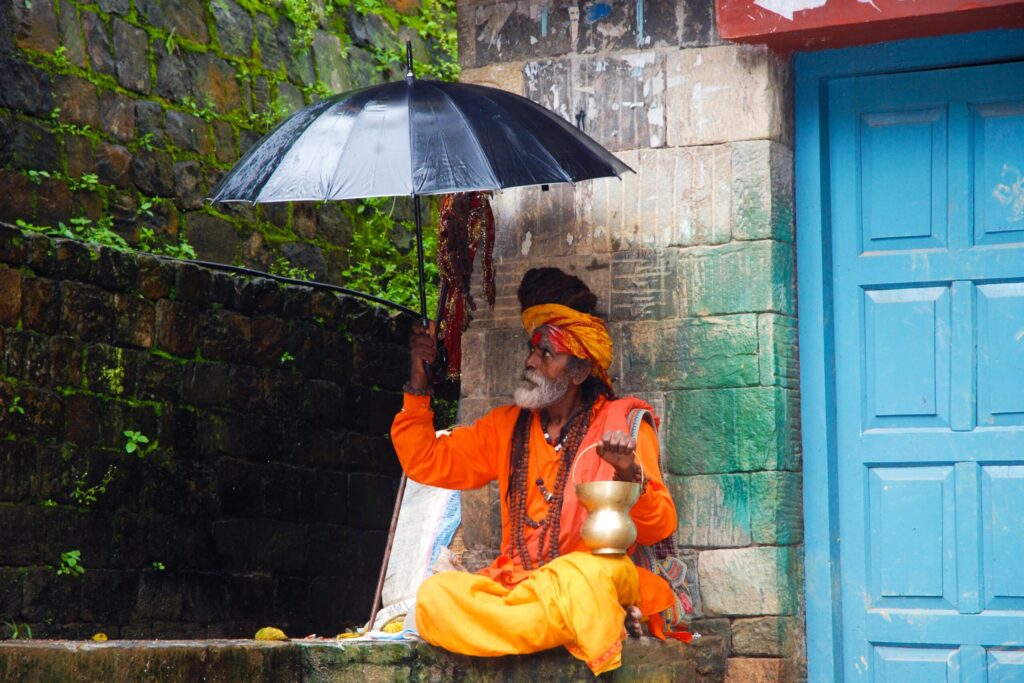
Hinduism is an extremely complicated religion to explain, mostly due to the fact that it is not a religion, but rather a family of religions. The word “Hindu” was actually a Persian word meant to describe the people of India, not a specific religion. This brings up the point though that Hinduism and India go hand in hand.
India is unbelievably diverse in every way; ethnically, geographically, religiously, you name it, and this diversity is celebrated, not feared. India is so diverse that there are 16 major languages spoken and hundreds of dialects, bringing it up to an estimated 850 languages spoken daily. This often makes it difficult for Indians from different parts of the country to talk with each other without a harsh language barrier, typically requiring English to be spoken as the lingua franca. This is all relevant to Hinduism because the family of religions practiced amongst this diverse people is equally diverse, and this diversity is again celebrated, not scorned. The term religion is also understood differently amongst Hindus than how we typically understand it in the West. Westerners often understand religion to be focused on doctrines and beliefs, while for Hindus, “religion” is sewn into the fabric of every part of daily life, including in medicine, art, music, who one can marry, what people can eat, what kinds of jobs one can have, and one’s overall hygiene practices.
All this being said, in Hinduism there is quite a bit of freedom as far as belief and practice goes. Hindus can be just about anything: pantheists, henotheists, monotheists, polytheists, atheists, dualists, and the list goes on. To go a step further, between Hindus, moral standards vary greatly, temple worship (or lack thereof) varies greatly, ritual practice varies greatly, and which God(s) to worship varies greatly (among many other things). Since Hinduism is so diverse, and since this is an article, not a book, we will talk about a few things that Hindus tend to have in common with each other, and leave some of the other details for later.
Samsara & Moksha: Samsara and Moksha are very fundamental beliefs for basically all Hindus. Samsara is the atman’s (soul’s) continuous cycle of birth and rebirth, which westerners often understand better as reincarnation. Samsara is not viewed positively, since there is much suffering that is endured in this endless process, and not to mention the fact that the next rebirth may not be enviable in the slightest. Not many of us would be particularly pleased to come back as a bug or a snake, for example. The ultimate goal of Hinduism is to finally be liberated from samsara. Moksha is just that. Moksha is liberation from this cycle, and there are multiple ways to achieve moksha, all rooted in dharma, or “right living.” The three main ways to go about this process are through the path of wisdom (jnana-marga), the path of action (karma-marga) and the path of devotion (bhakti-marga.) These different avenues allow for different forms of religious practices, depending on the disposition of the practitioners. People who enjoy getting out and doing things often gravitate towards the path of action, people who are more contemplative by nature often enjoy the path of wisdom, and those who are very passionate tend to find that the path of devotion best suits them. Some practitioners focus heavily on one path, but most people blend the three paths together with different emphasis placed on each option at different times of the day or even at different times of their lives. There is no singular right way to achieve moksha, each practitioner is called to choose a path that best suits their nature, despite what those around them may or may not be doing.
Trimutri: Most branches of Hinduism believe in the trinity of the supreme creator god Brahma, the preserver Vishnu, and the destroyer Shiva. Some traditions have their own special spins to this, but the basics often remain.
Deity Preference: Most Hindus prefer a specific deity as the focus of their worship, but they do not exclude others or deny their legitimacy.
Hinduism is clearly not an easy “religion” to get to know in five minutes, but one thing does tend to stand out, and that is the tolerance that underpins how Hindus tend to worship. It doesn’t matter much how you worship, who you worship, or where, the main focus is simply on how much heart goes into your process. If your heart and mind are focused, you are one step closer to achieving moksha.
SOURCES:
The Great Courses Series: Great World Religions: Hinduism – Mark W. Muesse
A History of the World’s Religions- Noss
The Religions Book – DK
Leave a Reply